- 0
- 1.404 word
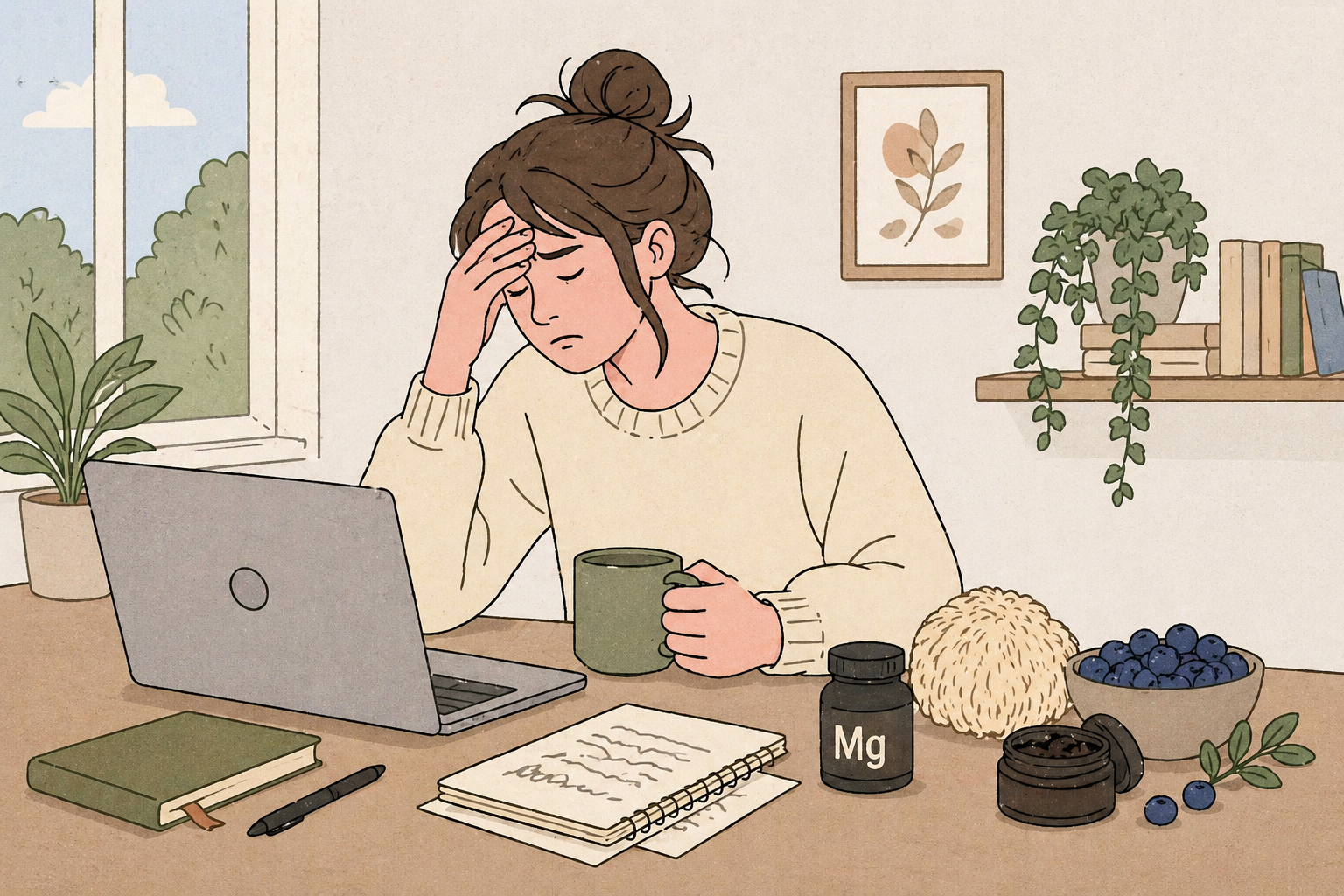
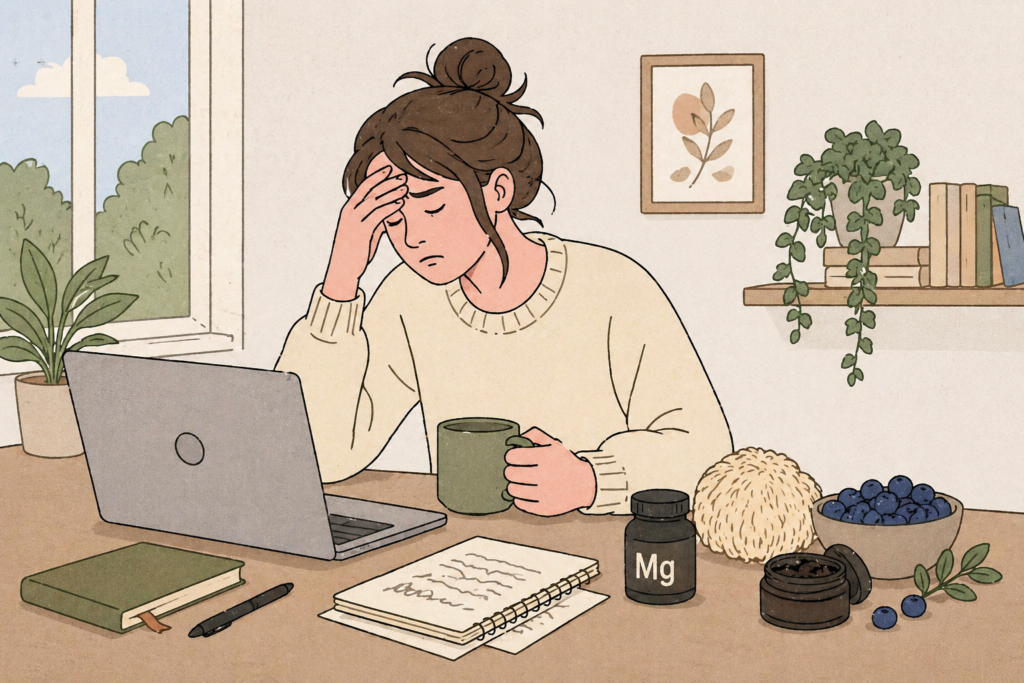
There’s a specific kind of exhaustion that has nothing to do with sleep. You wake up after eight hours, coffee in hand, and still feel like you’re trying to think through wet concrete. Words slip away mid-sentence. You re-read the same paragraph three times. You forget why you walked into a room. It’s not tiredness — it’s brain fog, and if you’ve experienced it, you know exactly how debilitating it can be. brain fog natural remedies
I spent two years testing brain fog natural remedies the wellness world had to offer: adaptogens, cold showers, intermittent fasting, blue light glasses, nootropic stacks with ingredients I couldn’t pronounce. Some helped a little. Most didn’t. A few were a complete waste of money.
This is my honest breakdown of the best brain fog natural remedies — backed by research, tested personally, and ranked by what actually made a real difference.
What Causes Brain Fog (And Why Natural Remedies Work)
Before reaching for any supplement, it helps to understand what’s actually happening. Brain fog isn’t a medical diagnosis — it’s a symptom, and it can stem from several different root causes:
Mineral deficiencies are far more common than most people realize. Magnesium, iron, zinc, and fulvic acid deficiency can all impair cognitive function. According to research published in Nutrients, magnesium plays a critical role in over 300 enzymatic reactions, including those responsible for energy production in the brain.
Chronic inflammation is another major driver. When your body is in a low-grade inflammatory state — from stress, poor sleep, or diet — your brain pays the price first. Research on neuroinflammation and cognitive function has found a direct link between systemic inflammation and cognitive impairment.
Mitochondrial dysfunction — your cells not producing energy efficiently — can leave your brain running on empty even when you’re technically rested.
Understanding your root cause matters because brain fog natural remedies don’t work the same for everyone. What clears the fog for someone with mineral deficiencies may do nothing for someone whose issue is inflammation or sleep disruption.
Brain Fog Natural Remedies That Actually Made a Difference
1. Shilajit — The One I Wish I’d Found Sooner
I’ll be upfront: I was skeptical. Of all the brain fog natural remedies I researched, a tar-like resin harvested from Himalayan rocks sounded the least likely to work. I was wrong.
Then I read the research.
Shilajit is one of the most studied natural substances in Ayurvedic medicine, and modern science is starting to catch up. A study published in the International Journal of Alzheimer’s Disease found that fulvic acid — shilajit’s primary active compound — may inhibit tau protein aggregation, one of the key mechanisms behind cognitive decline. A separate review in The Journal of Alzheimer’s Disease found that shilajit supplementation supports mitochondrial function, meaning your cells produce energy more efficiently.
In practice: I noticed a shift in mental clarity within about two weeks of consistent use. Not a dramatic overnight change — more like the fog lifting gradually. Sharper focus in the mornings. Less of that mid-afternoon cognitive crash.
What I use: I’ve been taking Natural Shilajit — pure resin form, which is the most bioavailable. The quality of shilajit varies enormously between brands (more on that below), so sourcing matters.
What to look for: Pure resin over powder or capsules, third-party tested, no fillers. Avoid anything that doesn’t disclose fulvic acid content.
2. Lion’s Mane Mushroom — For Focus and Nerve Health
If shilajit is the most ancient brain fog natural remedy on this list, Lion’s Mane (Hericium erinaceus) is the most researched modern one — and the science behind it is compelling.
Multiple human studies have shown that Lion’s Mane stimulates the production of Nerve Growth Factor (NGF), a protein essential for the growth and maintenance of neurons. A double-blind, placebo-controlled study published in Phytotherapy Research showed significant improvement in cognitive function scores among older adults who took Lion’s Mane for 16 weeks.
For brain fog specifically, Lion’s Mane addresses something most supplements don’t: neuroplasticity. It’s not just about getting more energy to your brain — it’s about supporting the actual health of your neurons.
How I take it: Powder added to coffee or a morning smoothie. Look for products that specify the fruiting body (not just mycelium), as that’s where the active compounds are concentrated.
3. Magnesium Glycinate — The Deficiency Nobody Talks About
This is the least glamorous remedy on the list and possibly the most important.
Studies estimate that up to 50% of Americans don’t meet the daily recommended intake for magnesium. And magnesium deficiency is directly linked to cognitive symptoms: poor memory, difficulty concentrating, anxiety, and disrupted sleep — all of which contribute to brain fog.
Magnesium glycinate specifically (as opposed to magnesium oxide, which has poor absorption) crosses the blood-brain barrier effectively and is well-tolerated by most people.
If you want to start with just one of these brain fog natural remedies, start with magnesium glycinate. It’s inexpensive, widely available, and the research is solid.
4. Optimizing Sleep — Not What You Think
This isn’t about getting more hours. It’s about getting better quality sleep.
The glymphatic system — your brain’s waste clearance system — is only active during deep sleep. This is when your brain literally flushes out the metabolic byproducts that accumulate during the day, including amyloid-beta proteins associated with cognitive decline.
What disrupts deep sleep: alcohol (even small amounts), eating too close to bedtime, inconsistent sleep timing, and blue light exposure before bed. What supports it: magnesium (again), a consistent sleep schedule, and keeping your room cool. No supplement will compensate for chronically poor sleep.
5. Anti-Inflammatory Foods — The Foundation Everything Else Builds On
No brain fog natural remedy protocol works optimally against a backdrop of a pro-inflammatory diet. What you eat either amplifies or undermines everything else on this list.
The research on diet and cognitive function is extensive. The MIND diet — a hybrid of the Mediterranean and DASH diets — was associated with a significantly slower rate of cognitive decline in a 2015 study of over 900 older adults.
Key foods for brain health: fatty fish (omega-3s), leafy greens, berries (particularly blueberries), olive oil, nuts, and turmeric. Key foods to reduce: ultra-processed foods, refined sugars, and industrial seed oils.
What I Stopped Spending Money On
Generic “focus” supplements with proprietary blends that hide actual dosages. If a company won’t tell you how much of each ingredient is in their product, that’s a red flag.
Expensive nootropic stacks that combine 15+ ingredients at doses too low to be clinically meaningful. More ingredients doesn’t mean more effect.
Detox teas and cleanses marketed for mental clarity. Your liver and kidneys handle detoxification. A tea isn’t going to meaningfully improve that process.
A Practical Protocol to Start With
- Week 1-2: Add magnesium glycinate (300–400mg) before bed. Optimize sleep timing.
- Week 3-4: Introduce Lion’s Mane — 500mg–1g daily with breakfast.
- Month 2: Add shilajit. Start with a small amount (rice grain size of resin) and increase gradually.
- Ongoing: Clean up diet — focus on anti-inflammatory foods, reduce processed food.
Give each brain fog natural remedy time to work. Brain health isn’t a two-week experiment — most interventions need 4–8 weeks of consistency to show meaningful results.
On Shilajit Quality — This Matters More Than You Think
The shilajit market is full of low-quality products. Some studies on poor-quality shilajit have found heavy metal contamination, which is why sourcing from a reputable brand with third-party testing is non-negotiable.
After trying several brands, I’ve settled on Natural Shilajit for its purity, sourcing transparency, and fulvic acid concentration. They ship internationally and the resin form means you’re getting the most bioavailable version of the compound.
The Bottom Line
Brain fog has real, addressable causes. The most effective approach combines brain fog natural remedies that target your specific root cause: mineral support (shilajit, magnesium), neuroprotection (Lion’s Mane), sleep optimization, and an anti-inflammatory diet. Start with one, give it time, then build.
Start with the basics. Add one thing at a time. Give it time to work.
Have you tried any of these brain fog natural remedies? What’s worked for you — and what hasn’t? Drop it in the comments below.
Disclosure: This post contains affiliate links. If you purchase through my link, I may earn a small commission at no extra cost to you. I only recommend products I personally use and believe in.
Autor

hello@wellnesscutter.com
Posts relacionados

How to Reduce Stomach Bloating: 8 Proven Remedies
- 0
- 1.241 word
If you’re trying to figure out how to reduce stomach bloating, you’re not alone — it’s one of the most common digestive...
Leia tudo
Natural Probiotic Foods: 8 Best Sources Backed by Science
- 0
- 1.345 word
You don’t need a supplement to fix your gut — though some do help. The most powerful probiotic sources are foods you...
Leia tudo